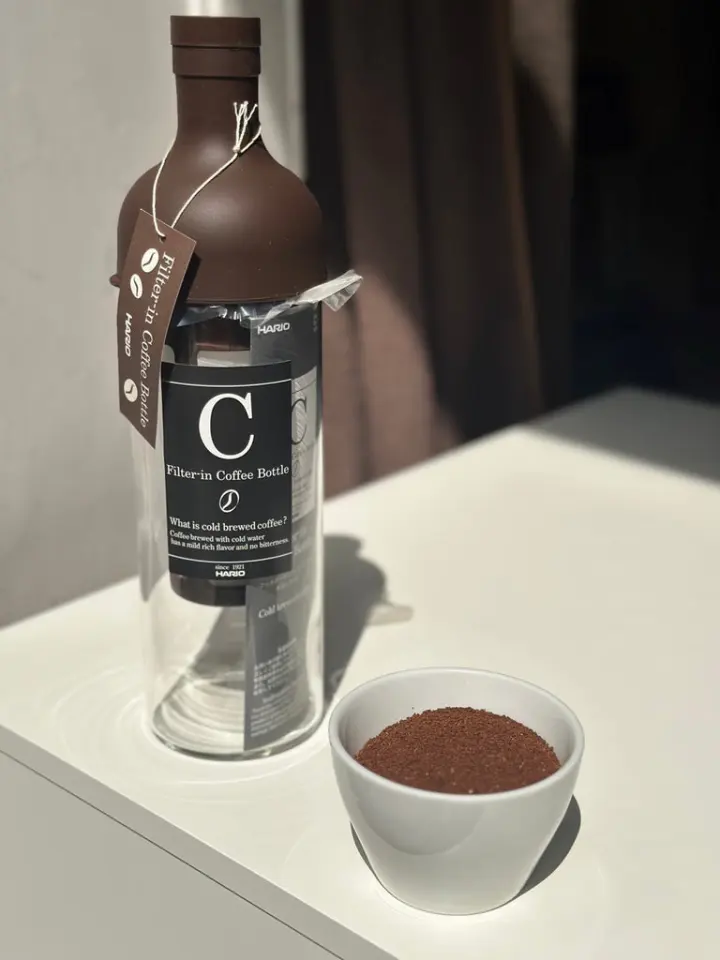
Cold brew extracts ground coffee in cold water over several hours, then separates the beverage from the grounds. Süssmund's guide emphasizes three adjustable factors: coffee selection, grind and contact time. Its preference is a lighter filter roast when the aim is to preserve fruit and sweetness, but a darker roast is not inherently unusable; it simply changes the flavor target and may call for a different recipe.
The source recommends a coarse, reasonably even grind and refrigeration during extraction. It gives a broad 12–24-hour window, with 14–16 hours as its own preferred starting range, and suggests checking flavor after 12 hours. Refrigeration and container cleanliness matter, and the refrigerator should meet its normal food-storage requirements rather than be warmed to accelerate the process. The article does not supply a coffee-to-water dose, so choose a complete recipe before beginning instead of guessing strength from steep time alone.
Taste a small filtered sample, then decide whether further extraction is useful. A watery drink may need a recipe or dilution change rather than simply more time, while bitterness can come from the roast as well as extraction. Record dose, water, grind and time for the next batch. Once filtered, serve over ice or combine with milk or tonic according to the coffee's profile; these additions should be evaluated separately from the base brew.
The conversation
A good question can make a better brew.