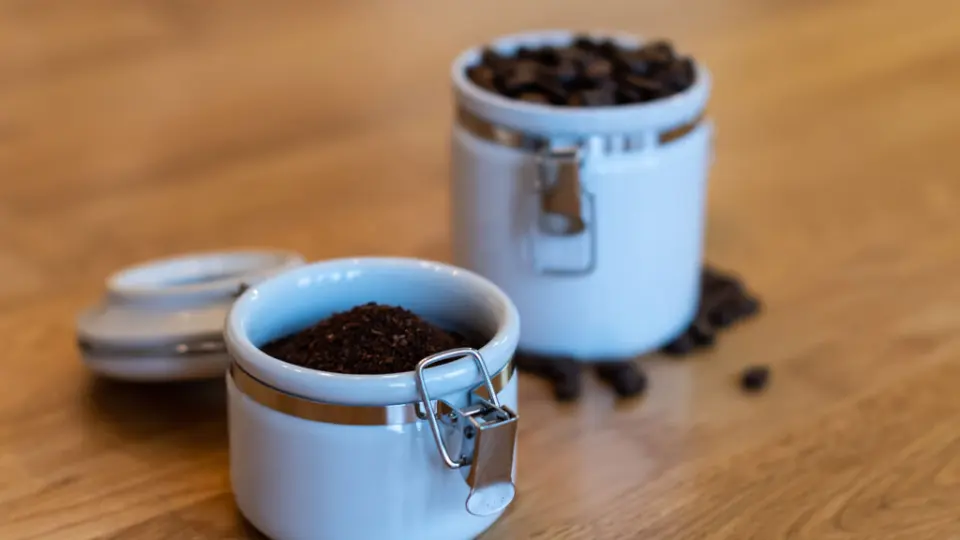
Freshly roasted coffee changes during storage, so the goal is to slow avoidable exposure while keeping the daily routine simple. Air, moisture, heat and light all work against consistent flavor. An opaque, well-sealed container in a cool cupboard is a more useful starting point than a transparent jar on a sunny counter. A location beside an oven or dishwasher can be warmer than it appears.
Buy quantities that suit your rate of use and, when practical, grind only what you are about to brew. This makes a small bag easier to manage than a large supply opened repeatedly over many weeks. Packaging varies: assess the seal and how you will close the bag rather than assuming that every retail package performs the same way.
Cold storage requires particular attention to moisture and odors. If you choose to freeze coffee, use a genuinely airtight arrangement and avoid repeatedly exposing a cold bulk supply to warm, humid air. Staleness mainly describes declining aroma and flavor; it is not a reason to ignore visible spoilage or damp storage. A storage method should make good coffee easier to repeat, not add needless handling.
The conversation
A good question can make a better brew.