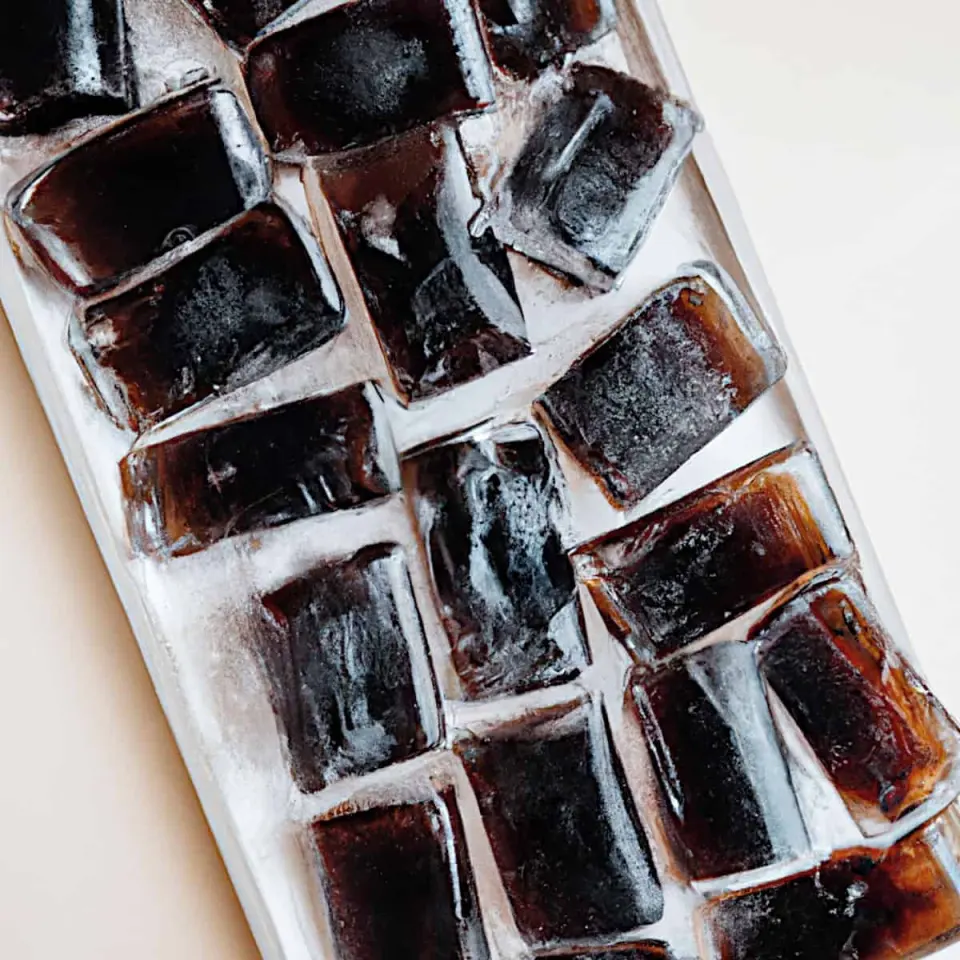
Coffee ice cubes replace water ice with frozen brewed coffee. In a glass of iced coffee, they can help avoid the progressive watering-down associated with ordinary cubes. In milk, they do something different: the drink becomes more coffee-forward as the cubes melt. Neither effect guarantees a constant flavor throughout the entire serving.
Brew coffee you enjoy, cool it appropriately and portion it into clean freezer-safe trays. Use a brewing strength suited to the eventual drink rather than assuming that the strongest possible coffee is always better. The source includes a concentrated preparation example, but an everyday cup, a stronger brew and a cold-brew concentrate will produce noticeably different cubes.
Once frozen, store the cubes so they are protected from freezer odors and easy to identify. Try a measured glass with a consistent number or weight of cubes and note the change over time. Very small cubes and large cubes melt differently, which can matter more than a decorative shape. Coffee cubes are a useful preparation technique when their changing contribution is part of the plan, rather than an overlooked source of inconsistency.
The conversation
A good question can make a better brew.