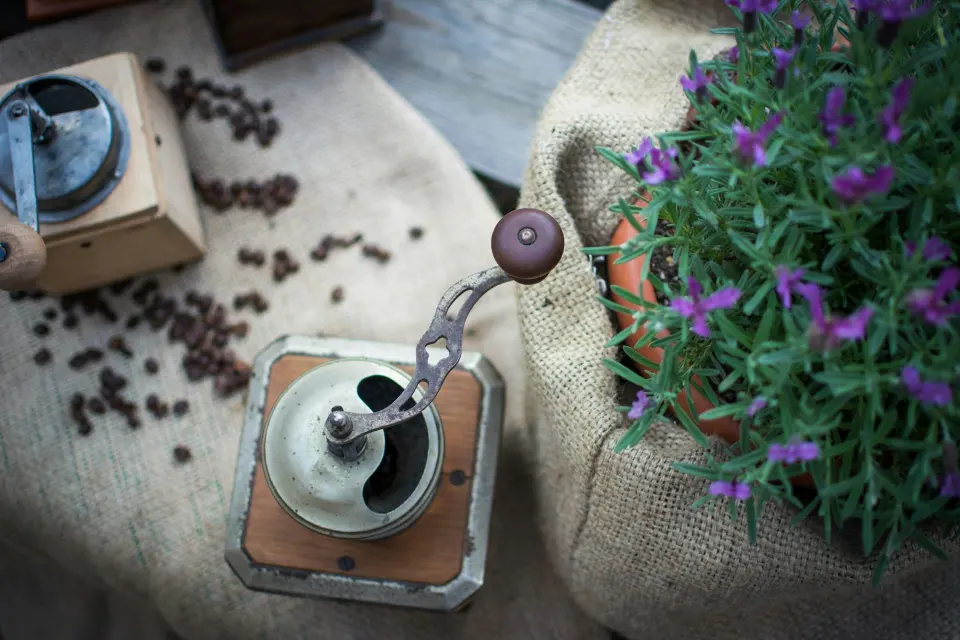
A grinder's number is a position within that mechanism, not a universal particle size. CoffeeBox's guide explains why two models can produce different grounds at the same number, and why calibration or burr replacement can shift a familiar setting. Start with the manufacturer's range for your brewing method rather than borrow a click count without its context.
Visual comparisons such as sugar or salt can establish a rough direction, but they do not measure the whole particle distribution. A small amount of very fine material can change flow even when the bulk looks similar. Espresso generally needs finer control than a typical filter recipe, yet adjustment resolution alone does not establish grinder quality.
Keep dose, water and the main pouring routine stable, then make a small grind change and record the result. Track flow or total time alongside sweetness, acidity and the finish. Sourness and bitterness can coexist for several reasons, including uneven extraction, so the combination does not by itself prove that a grinder must be replaced. Follow the manual for zeroing and burr contact; do not force a calibration procedure from a different machine.
The conversation
A good question can make a better brew.