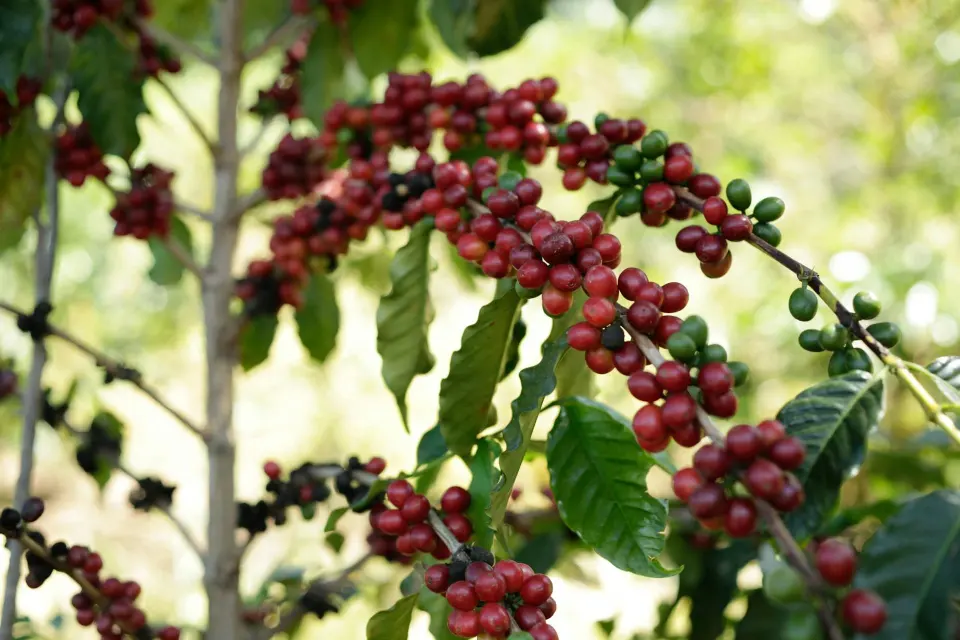
Caturra is a natural mutation of Bourbon known for compact growth. World Coffee Research identifies its discovery in Minas Gerais, Brazil, between 1915 and 1918, with selection work beginning later. This corrects the simplified discovery timeline in CoffeeBox's variety guide and separates a documented plant history from a dramatic origin story.
Compact stature made closer planting and management attractive, helping Caturra become important in parts of Latin America. Those advantages do not make it agronomically ideal everywhere; suitability depends on local conditions and disease pressures. A variety's cultivation role is different from a promise about flavor or farm economics.
CoffeeBox emphasizes citrus and regional differences in its tasting discussion. Treat those as possible profiles, not an identification test. The same variety can produce different results with site, harvesting, processing and roasting. When choosing a bag, read Caturra alongside the producer, process and roast rather than above them. A washed lot and an expressive natural may suit very different preferences despite sharing a variety. Useful tasting begins with the actual coffee, not an assumption that a cultivar name dictates its acidity or extraction recipe.
The conversation
A good question can make a better brew.