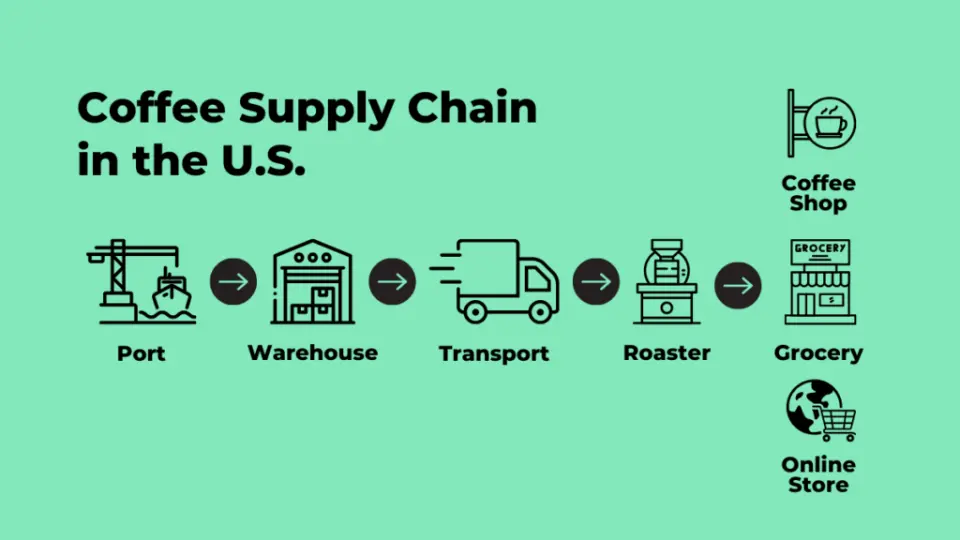
A coffee bought in an American café usually began as a crop grown elsewhere. Coffee trees need suitable warmth, rainfall and growing conditions, which limits commercial production to particular regions. Hawaii and Puerto Rico have coffee-growing traditions, but domestic growing areas supply only a small part of the country's consumption. The name of a drink, such as Italian espresso, does not identify where its beans grew.
Imported green coffee then moves through a chain of work inside the United States. Warehousing, transport, roasting, packaging, equipment, retail and food service all contribute to what eventually reaches the cup. This is why the coffee economy is wider than the value of an imported bag of beans. Employment and spending estimates describe different parts of that chain and should always be read with their publication date.
For a buyer, the practical lesson is to separate three questions: where was the coffee grown, who roasted it, and how will it be prepared? A local roaster can use imported beans while still providing local service and expertise. Asking these questions gives a more useful picture of a product than relying on national styling on the package.
The conversation
A good question can make a better brew.