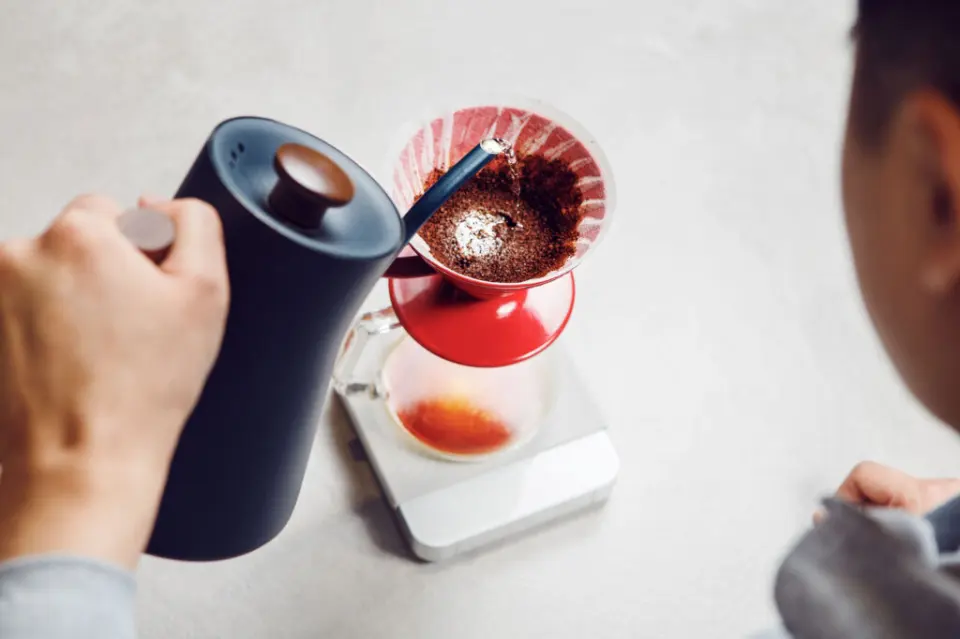
Pour-over coffee is made by directing hot water onto grounds held in a filter, allowing brewed liquid to pass into a cup or server. It belongs to the same broad family of filtered, gravity-driven brewing as automatic drip, but the person pouring controls how and when water reaches the coffee bed.
That control can be enjoyable, but it also introduces variables. Keep the coffee dose, total water and grind setting consistent while learning the effect of your pouring pattern. Seat the appropriate filter securely, rinse it if recommended for the setup, and discard the rinse water before brewing. A scale lets you see the amount added instead of estimating each pour by eye. The final draining time is a useful observation, not a target that overrides taste.
When a cup disappoints, avoid changing the grinder, pouring pattern and dose all at once. Note whether the problem is strength, unevenness or an unwanted flavor, then make one deliberate adjustment. Different dripper shapes and filters can respond differently, so a recipe should identify the actual equipment used rather than promise identical results from every pour-over device.
The conversation
A good question can make a better brew.