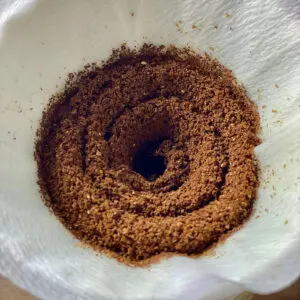
Pull & Pour's flexible pour-over framework uses twenty grams of coffee with three hundred and twenty grams of water as its example. The first wetting uses sixty grams, three times the coffee dose, leaving two hundred and sixty grams to divide into two later pours. That clear water budget is more transferable than copying a grinder dial from another setup.
The source treats the recipe as a starting pattern that can be adjusted for coffee, brewer and batch size. It considers grind, temperature and the division of pours, while placing taste ahead of a rigid finishing time. Scaling the dose changes the coffee bed, so a larger batch may benefit from a different pouring arrangement rather than identical handling with larger quantities.
Prepare the correct filter and discard rinse water before the measured brew. Record which variables you change and judge the cup after it has cooled enough to assess comfortably. A framework is useful when it keeps experiments interpretable. It does not mean that one temperature, swirl or drainage time guarantees the same result through every cone material, coffee roast or serving size.
The conversation
A good question can make a better brew.