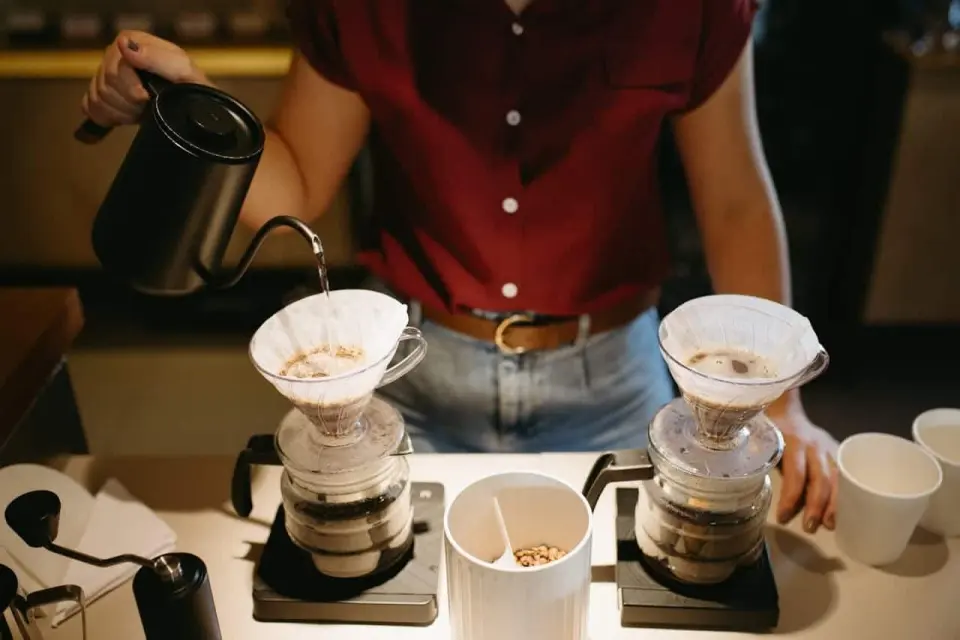
CoffeeBox compares circular and central pouring, as well as pulsed and continuous water delivery. These describe different parts of a technique. A circular pour can be continuous or divided into stages, for example. The useful question is how the complete pattern wets the bed, changes its water level and moves the grounds.
Record more than the pattern's name. Note the amount in each pour, its timing, approximate delivery speed and whether the water drains substantially between stages. Keep the coffee, dose, grind and total water consistent when comparing two approaches. Otherwise, a different cup cannot be attributed confidently to the circle or pause alone.
Kettle height and stream behaviour also affect agitation, but a simple rule that higher always means more effective agitation is incomplete. Aim first for controlled, repeatable delivery that wets the grounds without overflowing the brewer. Then taste the result and adjust deliberately. No pouring pattern guarantees a universally cleaner, sweeter or more layered coffee across every dripper and recipe.
The conversation
A good question can make a better brew.