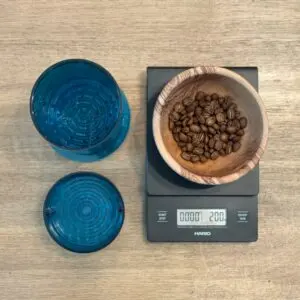
Pull & Pour's Tricolate recipe attributed to Scott Rao uses twenty grams of coffee and four hundred grams of water. An initial sixty-gram wetting is followed by two one-hundred-and-seventy-gram additions. The total makes a one-to-twenty coffee-to-water relationship by mass, intended for the brewer's particular geometry and water-distribution arrangement.
The source places the final addition according to the remaining water level and allows a much longer overall drainage period than many ordinary cone recipes. That is a recipe context, not proof that any other dripper should be made to take seven to ten minutes. Grind and coffee-bed depth affect the result, while the shower screen is part of the actual setup rather than an incidental accessory.
Follow the instructions for your Tricolate version and handle a filled hot brewer carefully rather than imitating forceful movements without control. Record dose, water, grind and drainage observations, then taste before making another change. The useful lesson is how the recipe fits the device's attempt to limit bypass, not a claim that a longer brew or a higher ratio automatically yields better coffee through every method.
The conversation
A good question can make a better brew.