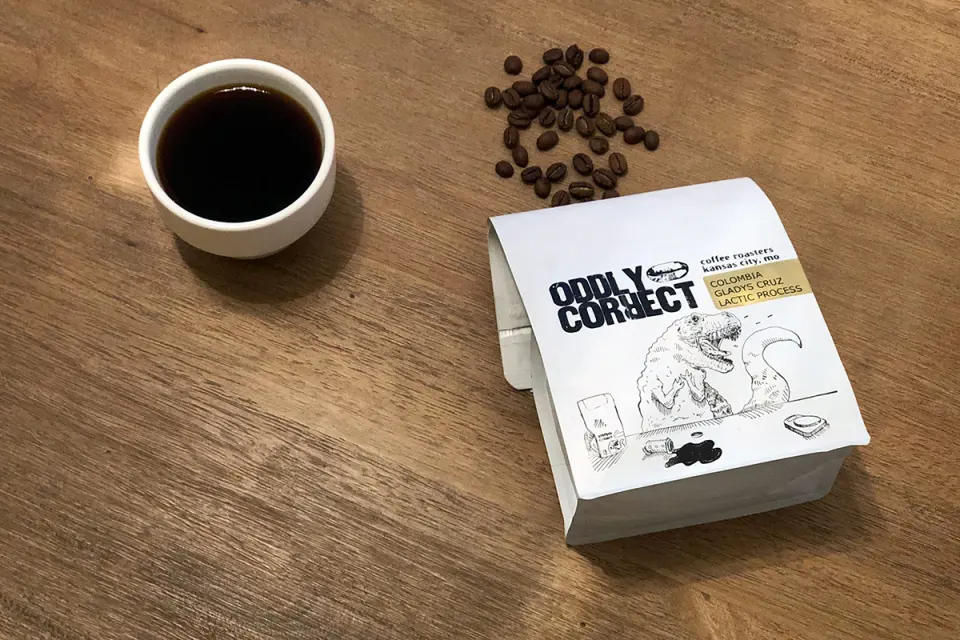
Gladys Cruz, a Colombian coffee roasted by Oddly Correct, attracted the archived Pull & Pour reviewer because of its stated lactic-fermentation processing. The reviewer first drank it as pour-over in Kansas City and later explored a purchased bag. Colombia is in South America; the source's later reference to a Central American category should not obscure the coffee's actual origin.
The source described berry fragrance, blackberry impressions and quieter nutty or roasted notes. Fruit became clearer as the cup cooled, and the acidity reminded the reviewer of biting into an apple. A drying finish was the main criticism. Importantly, the reviewer did not find a sensory feature that uniquely proved the processing method. A complex cup can resemble coffees made through other approaches, so a processing label alone cannot identify flavor or quality.
The archived roaster explanation attributed the method to La Palma y El Tucán and described controlled fermentation conditions intended to favor lactic-acid bacteria before washed processing continued. This account is background supplied by the roaster, not a fermentation protocol for home use or independent laboratory verification. When comparing such coffees, examine sweetness, acidity, texture and finish alongside the producer's documented process. Do not assume that the word lactic means milk was added, and do not use the label as a substitute for tasting the actual lot.
The conversation
A good question can make a better brew.