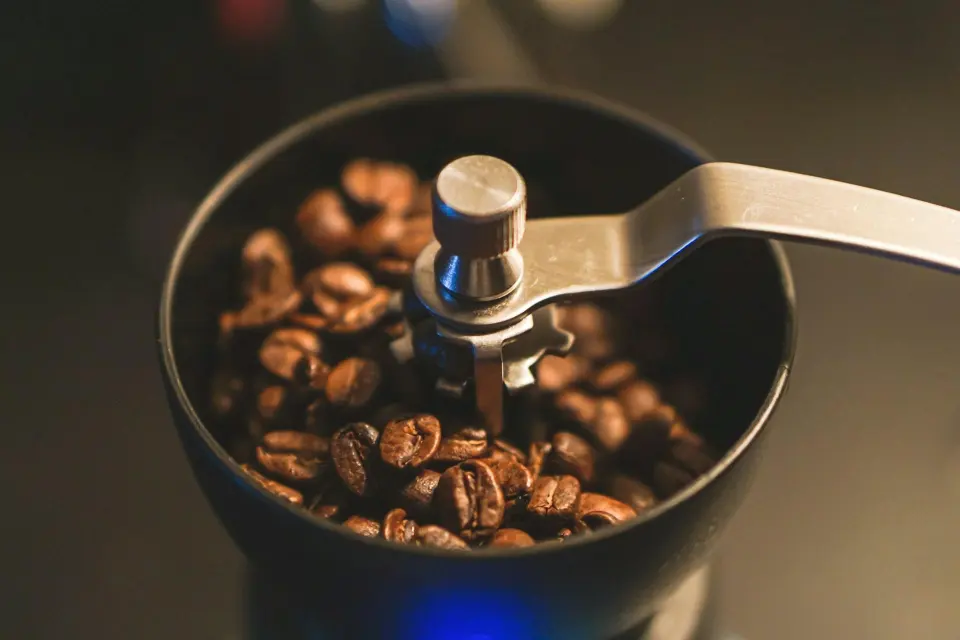
CoffeeBox's manual-grinder guide focuses on burrs, shaft support and the mechanism that sets their spacing. Those details matter because a hand grinder must hold a repeatable position while the user supplies the energy. However, a large burr or several bearings on a specification sheet does not by itself demonstrate better coffee.
Start with how you brew. Espresso requires sufficiently fine, controllable adjustment, while filter use may prioritize clarity and quick movement between familiar settings. Check whether the stated range covers your method, how easily a setting can be recorded and whether the grounds container holds your normal dose. An external dial can simplify changes, but actual usability matters more than its appearance.
Consider grip diameter, handle clearance, weight and the effort of grinding your preferred roast. Light, dense beans and fine settings can demand more work. Cleaning access and replacement-part availability also affect long-term value. A hand grinder can save counter space and travel well, but repeated large batches may favor an electric option. Choose for the routine you will maintain, rather than assuming manual grinding is the obligatory first step for every beginner.
The conversation
A good question can make a better brew.