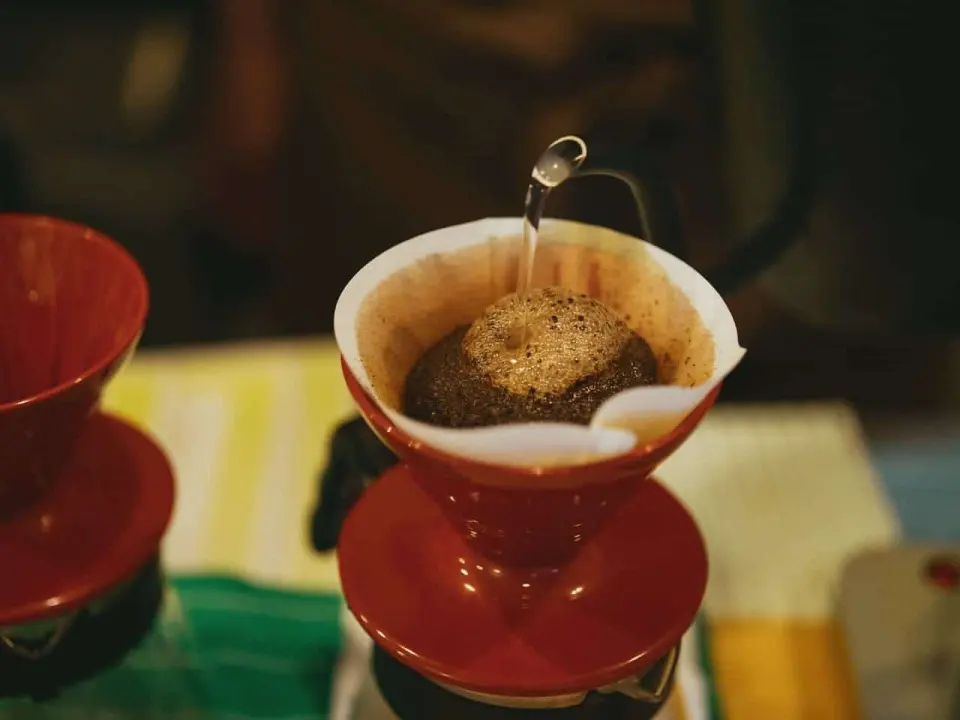
CoffeeBox compares four common dripper materials: ceramic, resin, metal and glass. A cold brewer can absorb heat from the water, while its mass, shape and construction influence how it warms and cools. Material matters within that system, but a universal ranking of every ceramic, plastic or steel design would ignore substantial differences between products.
Consider practical use as well as appearance. Weight and breakage resistance matter for travel; cleaning access and compatible filters matter in daily use. Follow the maker's guidance for preheating and care. A metal holder designed for paper filters also differs from a perforated metal filter: the latter changes the filtration itself, not merely the material around the coffee.
To compare thermal behaviour, keep the recipe and preparation consistent instead of changing filters, dose and pouring together. Hario, for example, offers V60 designs in several materials, but availability of multiple versions does not establish an automatic flavour hierarchy. Choose through documented construction and the routine you need.
The conversation
A good question can make a better brew.