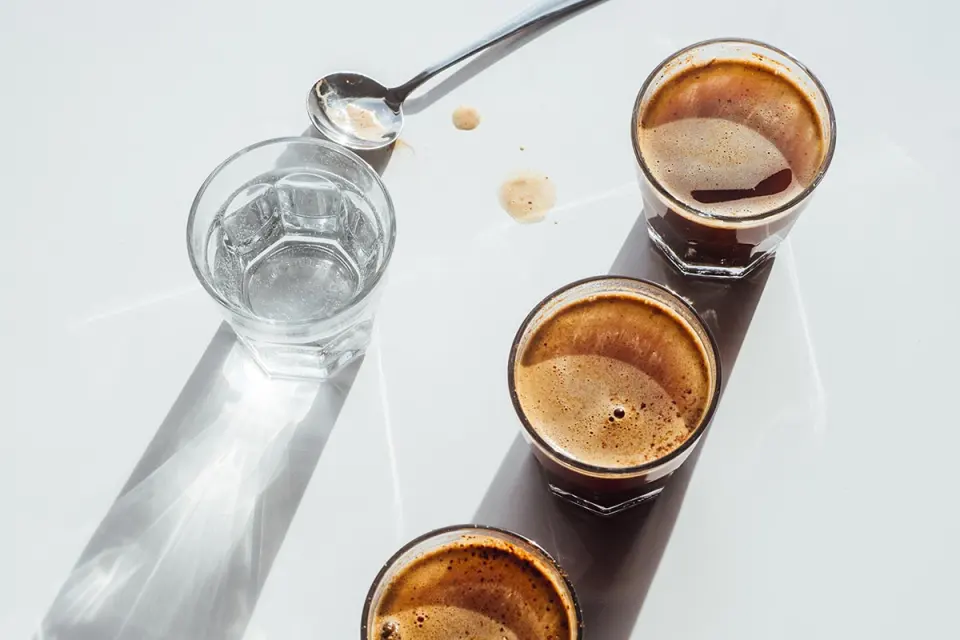
The source article is a first-person account by Luke of High Bank Coffee Roasters. It describes starting with a 250-gram sample and deliberately using a very light initial roast to look for problematic characteristics. That is an account of one business's workflow, not BeanScene's own roasting practice.
Its important distinction is between diagnosing the green coffee and choosing a final retail roast. A sample intended to expose problems is not necessarily the recipe that will best represent the coffee to customers.
For a reader learning about roasting, this explains why an initial cup can serve a particular analytical purpose. Subsequent development and comparison need their own records and sensory assessment. Do not copy the sample profile as a universal instruction for every roaster; the value is understanding what question each stage is designed to answer.
The conversation
A good question can make a better brew.