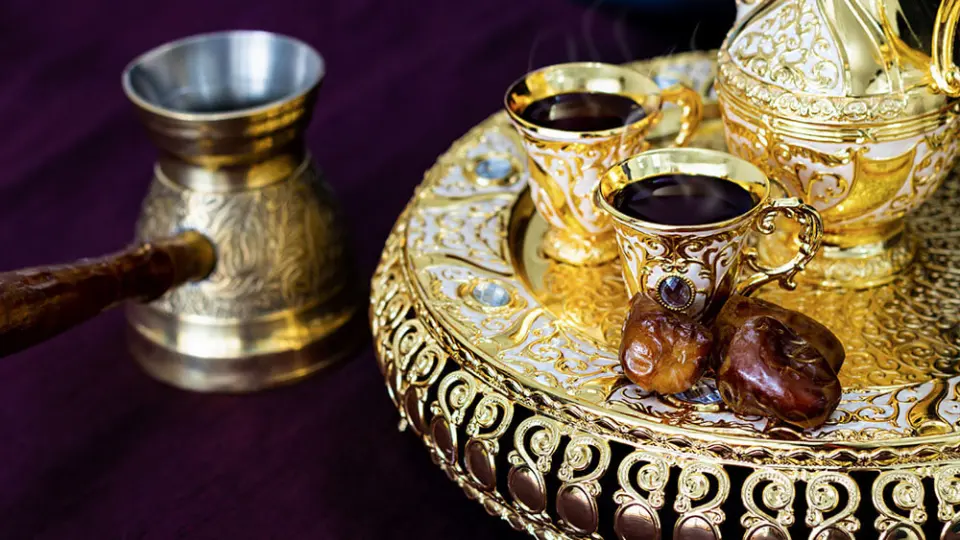
Saudi coffee belongs to a wider group of Arabian coffee traditions, and regional or household preparation can differ. Some versions feature relatively light-roasted coffee and aromatic spices such as cardamom. Describing every version as identical, or confusing it automatically with another country's unfiltered coffee, misses the variety of these practices.
Roast appearance, the way coffee is simmered or steeped, and the handling of grounds all influence the drink. Small servings are part of many traditional presentations, but an exact spice mixture or strength should be understood as a particular recipe rather than a compulsory national formula. A drink can be valued for the circumstances in which it is shared as well as its flavor.
If you want to explore the style at home, choose a clearly described recipe with specified coffee, water and spice quantities, and keep notes before changing it. If ordering in a café, asking how that establishment prepares and serves its coffee is more useful than relying on a generalized expectation. Look for information about the actual beans too: the name of the serving tradition does not, by itself, identify where the crop was grown.
The conversation
A good question can make a better brew.