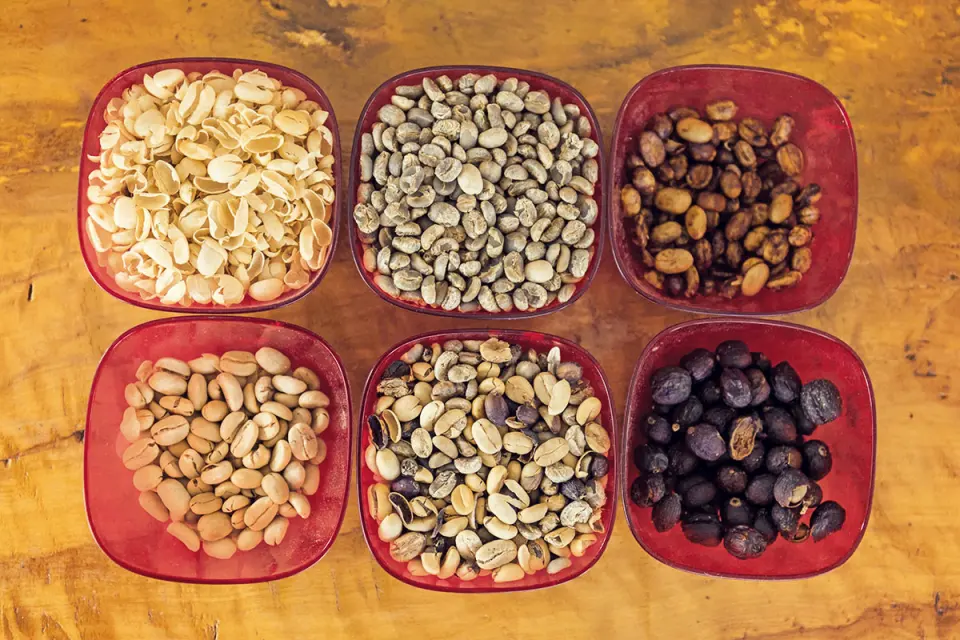
Coffee processing describes what happens to the harvested fruit before the green seed is ready for later preparation and roasting. Pull & Pour's overview, co-written with Joshua Jones, organizes the subject around three familiar categories. They are useful starting points, although producers use many variations within each.
In washed processing, the fruit is removed and the remaining mucilage is cleared before the coffee dries. Honey processing leaves some mucilage on the seed during drying; the name refers to that sticky layer rather than added honey. Color labels such as yellow, red or black are not perfectly standardized, so a producer's actual method is more informative than the color alone.
Natural processing dries the coffee inside the whole cherry before the dried fruit is removed. These methods can influence sweetness, fruit expression, texture and fermentation character, but none guarantees a particular flavor or quality. Avoid treating washed as automatically superior or natural as automatically more sustainable: execution and local conditions matter. Use the process alongside origin, variety and roast information, then let the brewed cup confirm whether the style suits your taste.
The conversation
A good question can make a better brew.